Emphatic Encounters
We are excited to restart the “Emphatic Encounters” project, with aspirations to evolve it into a “Global Empathy Project.” The initiative was suspended in 2019 due to the COVID-19 pandemic.
Since then, the world has witnessed significant changes, including the end of COVID-19 and renewed conflicts such as Putin’s invasion of Ukraine and the war between Israel and Hamas.
Now more than ever, the concept of “Emphatic Encounters” is critically relevant.
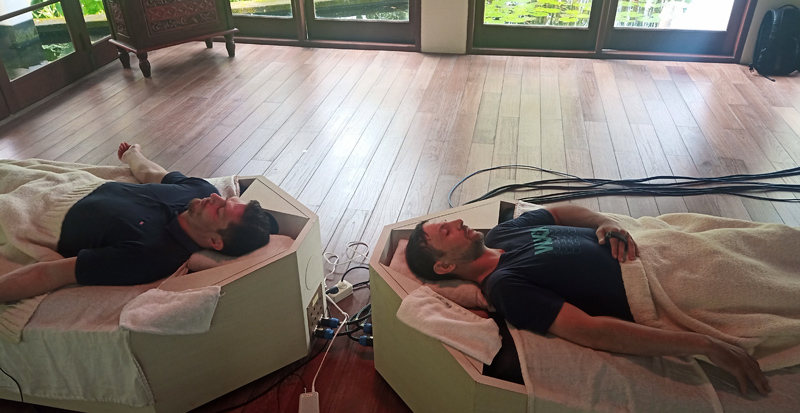
Despite the adversities, friendships persist between many Ukrainians and Russians, resisting the influence of propaganda.
Look at a true story of Tim and Ivan at andamon.eu
However, deep-seated trauma, pain, and prejudice challenge the restoration of trust on both sides.
Our world is gradually losing empathy, essential for our survival, leading to escalating conflicts and wars. Using the psychointeractive systems theory and technology (PI, 2001-2024), a development from biofeedback, we can measure the mental activation correlation between individuals. Participants are connected to a computer via electrodes on their fingers, and our specially adapted VERIM software processes the data.
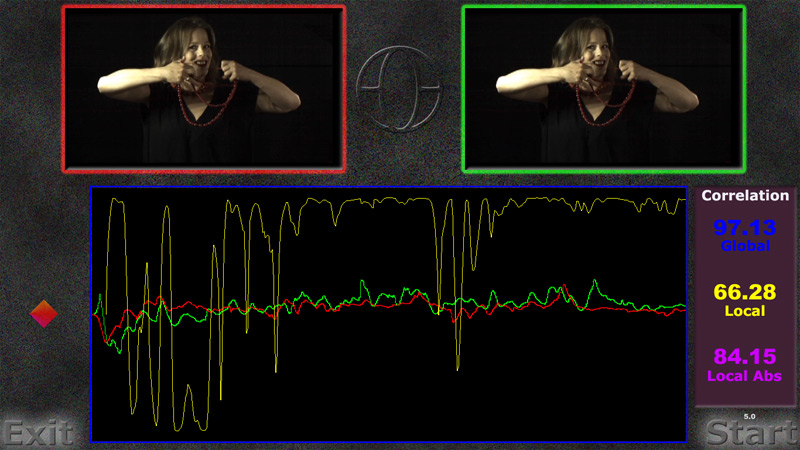
A typical “Emphatic Encounter” displays a psycho-physiological correlation as high as 97% between participants, particularly notable among family members. This high correlation serves as objective evidence of empathic capacities, but the real value lies in the process itself. The project creates an artistic space that fosters empathy, moving participants to emotional depths.
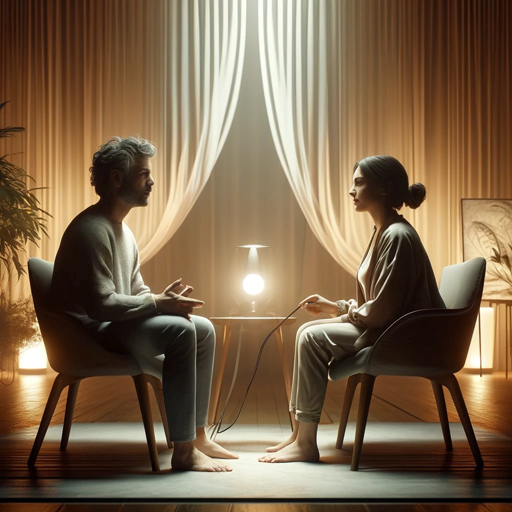
This project underscores our profound ability to resonate empathically, a trait shared by all mammals and described in detail in the book “A General Theory of Love” by Thomas Lewis, Fari Amini, and Richard Lannon. This limbic resonance allows mammals to connect deeply, influencing and adapting to each other’s emotional states.
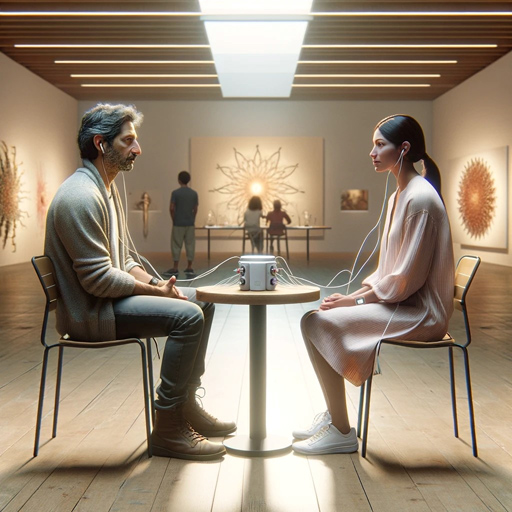
Inspired by these promising results, the Muses Foundation is developing an artistic and peace-promoting project: “Emphatic Encounters.” Our diverse team is designing installations that enhance interpersonal connections through audio, visual, and tactile feedback, initially targeting museums and galleries with plans to extend to conflict zones.
(2019: We are currently seeking contacts in Israel and Palestine and are open to other suggestions. The project also aims to reach displaced families affected by the Hiroshima disaster, providing empathic feedback to those who have lost peace of mind and are isolated due to contamination fears.)
Now we are looking for Russians and Ukrainians who would like to participate in this project.
Empathic Encounters Session Overview:
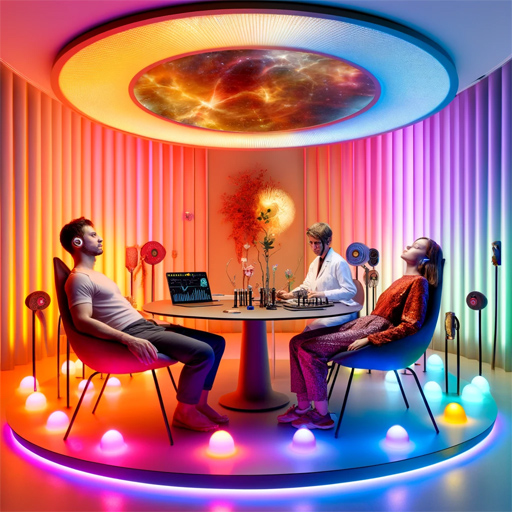
Part 1: Initial Connection
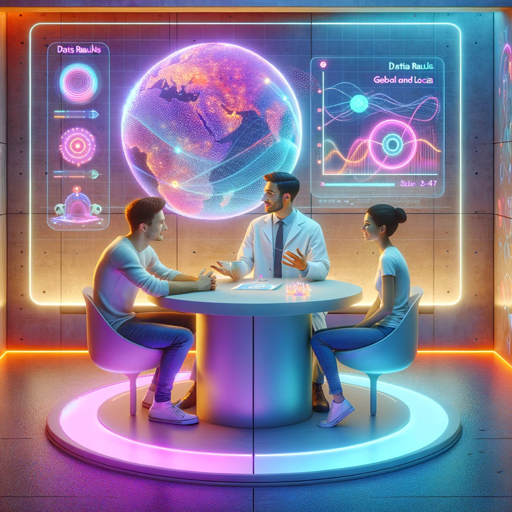
Two participants, referred to as probands, sit across from each other at a round table in a small room, with a scientist guiding the session. A laptop on the table displays the GSR (Galvanic Skin Response) readings of both individuals. The scientist instructs them to close their eyes and focus on feeling the presence of the other person for five minutes.
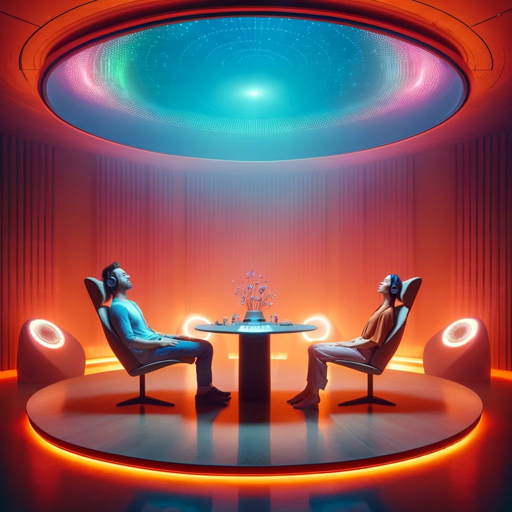
Part 2: Vibroacoustic Interaction
After five minutes, the session intensifies as small vibro-acoustic transducers, controlled by a program, activate. Each participant has two transducers that convey the relaxation, activation states, and focus levels of the other participant, allowing them to “feel” each other on a basic psychophysical level.
Part 3: Results Display
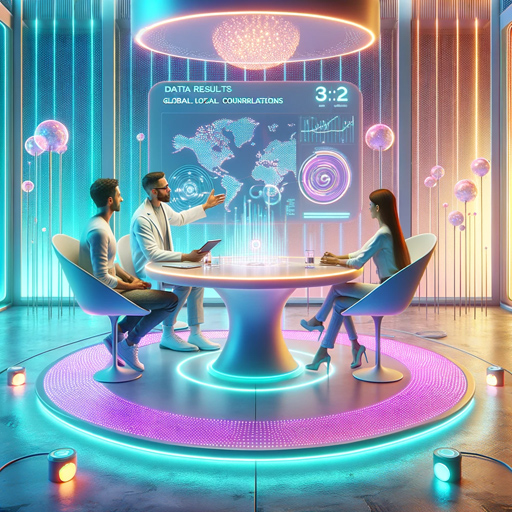
The session concludes by displaying and analyzing the results, showing global and local correlations from the interactions in the first two parts.
If you’re interested in supporting by donating or joining the “Emphatic Encounters” project, whether in your locality or for a different cause, please reach out to us through our contact form.
Donate:
Involved in the project are:
The MUSES.TV Foundation connects people through interdisciplinary projects that blend art and science. They utilize psychointeractive systems (PI) to engage with human emotions as a communication tool. These systems, particularly effective in educational settings, combine biofeedback with stress/attention factors to enhance learning. Projects also incorporate traditional arts like music, theater, and martial arts to promote empathy, trust, and confidence. For more information, visit MUSES.TV.

The ORION Foundation, established in 2004, focuses on cultural, pro-social tasks, and preserving regional heritage. Utilizing the historic Villa Orłowo, the foundation hosts artistic exhibitions in painting, sculpture, photography, and computer graphics. Its “Amber Road – Via dell’Ambra” project fosters cultural exchange between northern Poland and northern Italy. In 2018, the Kresy Calendar project was launched to protect Polish cultural heritage in the former Eastern Borderlands. Post-Ukraine war, the foundation aided refugees. Recognized as a public benefit organization, ORION supports children’s tennis, scholarships, and combats social exclusion through internships and professional courses.
Fundacja ORION, 88-110 Orłowo 54
Specialists at the Vilnius District Psychological-Pedagogical Service in 2012 underwent training and began working with the VERIM Biofeedback method. This method has gained significant popularity, and now specialists in 14 counseling centers across Lithuania (about 25 percent of all centers in the country) use VERIM Biofeedback to assist their clients.
School psychologists also recognized the benefits of the Biofeedback Verim method. In 12 schools in the Vilnius district, Biofeedback equipment is used to help children address issues with stress, concentration, and to teach effective relaxation techniques.
Since 2018, the center has been conducting Lego robotics classes, with over 250 children from Vilnius district schools participating in the workshops.

VERIM specializes in psychointeractive systems, combining biofeedback technology with artistic and therapeutic practices. Their projects focus on enhancing emotional intelligence, empathy, and self-regulation through innovative, interactive installations. These installations are used in various fields, including education, therapy, and performance arts, to create immersive experiences that foster emotional connections and personal growth. VERIM’s approach integrates science and art, making complex psychological concepts accessible and engaging for participants. For more details, visit VERIM.ee

MindPeace is dedicated to promoting mental well-being through innovative, science-based approaches. They offer a range of programs and resources designed to enhance mental health and resilience. Their initiatives integrate mindfulness practices, stress management techniques, and modern technology to support personal growth and emotional balance. MindPeace aims to create a global community focused on mental wellness, providing tools and support for individuals to achieve a peaceful mind and a balanced life. For more information, visit MindPeace.world
Centrum Biofeedback in Wrocław specializes in utilizing biofeedback technology to improve mental and physical health. Their services include EEG, GSR, and QEEG biofeedback, which help clients enhance concentration, manage stress, and achieve optimal performance in various fields like education, sports, and personal development. They also offer coaching and breathing techniques such as mindfulness and the Buteyko method. The center aims to help individuals regulate their emotions and physiological responses, ultimately improving overall well-being. For more information, visit Centrum Biofeedback.
The Project is supported by donations from:
TamasLab focuses on the use of fractals and algorithmic compositions, particularly through AudioStrobe stimulation, to enhance cognitive and emotional well-being. Their innovative systems utilize fractal patterns and sound synchronization to create immersive experiences that support stress relief, improved focus, and mental health. By integrating principles of mathematics, art, and technology, TamasLab aims to provide effective tools for personal development and therapeutic purposes.
Muses.tv is supported by: